10 Jan 2026 - News
Eczema Relief the Ayurvedic Way: Heal from Within
Why does reactive skin keep returning, even when you use the "right" creams?
Many people address sensitive skin only at the surface level, but Ayurveda teaches that skin reactivity begins inside the body, long before it appears on the surface. In this article, you'll learn how Ayurveda approaches reactive skin naturally, how digestion and stress affect your skin, and what you can do to support long-term skin balance from within.
Ayurveda and Reactive Skin: Understanding the Underlying Imbalance
In Ayurveda, reactive and sensitive skin is not viewed as a random skin condition. It is considered a sign of internal disruption, often related to digestion, excess internal heat, and toxin buildup in the body. When digestion is weak, the body struggles to fully process food. Over time, undigested material accumulates and creates ama, a toxic residue that circulates through the system and often exits through the skin.
This is why many people with reactive skin also experience bloating, food sensitivities, fatigue, or a feeling of heat in the body. The skin becomes an outlet for what the body cannot process internally.
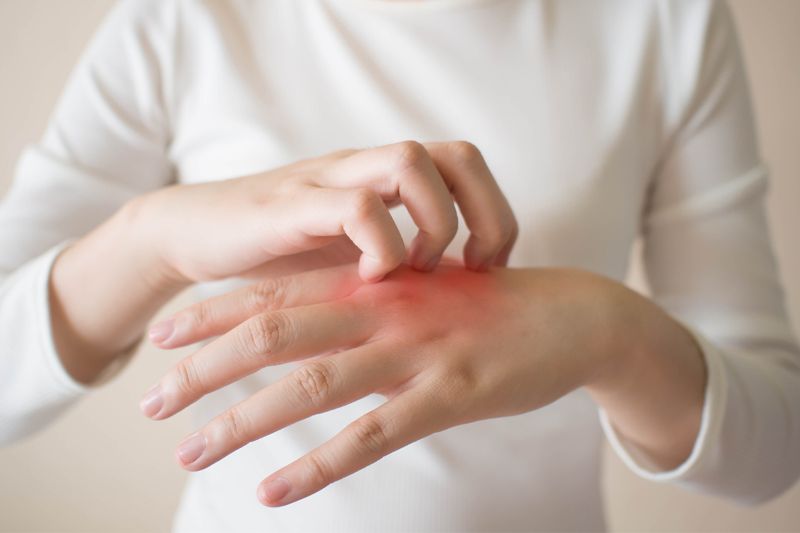
Ayurveda identifies different patterns of reactive skin based on individual constitution. Some people experience red, hot, burning skin. Others experience dryness, cracking, or intense itching. Each presentation reflects a different imbalance and requires a personalized approach.
By addressing digestion, supporting the liver, and calming the body's natural immune response, Ayurveda works to restore skin balance at its source instead of suppressing surface symptoms. This holistic approach allows the skin to recover gradually and sustainably.

In Ayurveda, skin health is deeply connected to the strength and quality of digestion
Why Natural Skin Relief Requires Nervous System Balance
Stress is one of the most overlooked triggers of skin reactivity. From an Ayurvedic perspective, chronic stress overheats the system, weakens digestion, and disrupts the skin's natural protective barrier. This is why flare-ups often appear during emotionally demanding periods.
Natural skin relief requires calming the nervous system. Ayurveda emphasizes routine, warmth, and nourishment to signal safety to the body. When the nervous system relaxes, the skin becomes less reactive and the body's natural renewal process can function more effectively.
Daily habits matter more than occasional sessions. Eating warm, cooked foods supports digestion. Avoiding extremes such as very cold foods, harsh cleansers, and irregular sleep helps prevent flare-ups. Ayurveda teaches that consistency creates lasting balance.
This approach is especially effective for people who feel they have tried everything and still struggle with their skin. Instead of targeting the skin directly, Ayurveda restores internal harmony so the skin can regulate itself naturally.
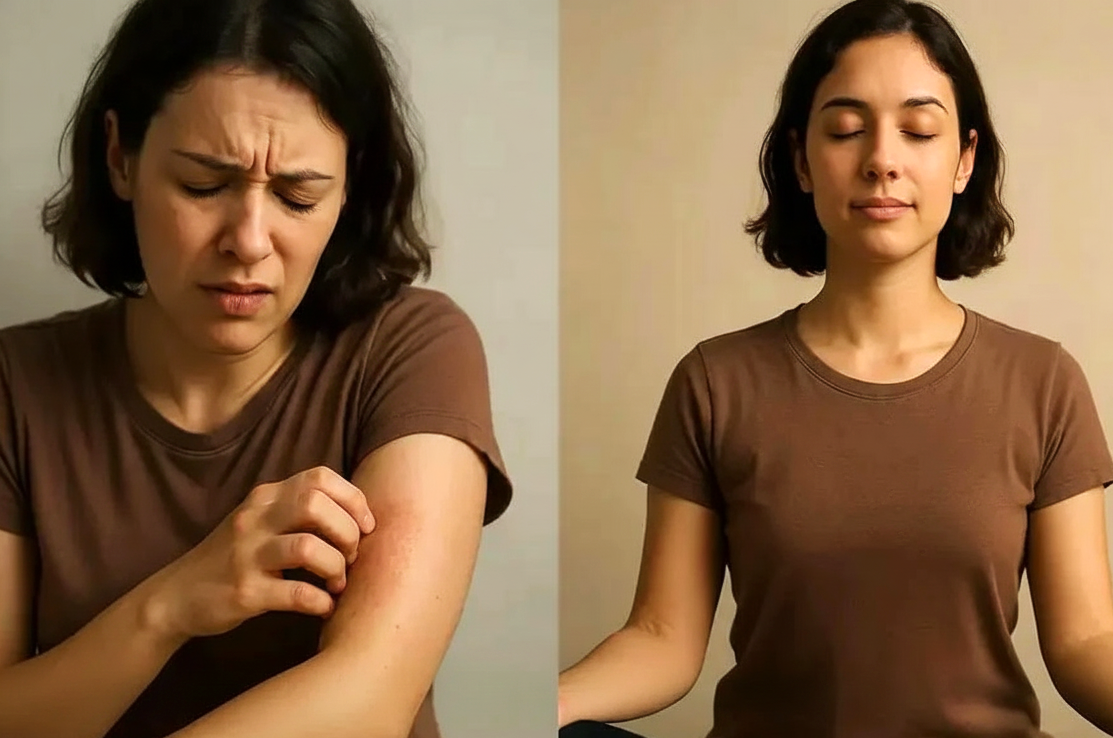
Stress overheats the system and weakens the skin's natural protective barrier, Ayurveda teaches
Simple Ayurvedic Home Practice for Skin Support
One of the most effective Ayurvedic practices for sensitive skin is warm oil massage, known as Abhyanga. This practice is gentle, grounding, and easy to repeat at home.
Abhyanga: Warm Oil Self-Massage for Sensitive Skin
What you need:Organic sesame oil (or coconut oil if heat and redness are intense) and 5 to 10 minutes before showering.
Steps:- 1Warm the oil slightly until it feels comfortable to the touch.
- 2Apply the oil gently to the skin using slow, circular movements.
- 3Focus on dry or reactive areas without rubbing or pressing.
- 4Let the oil absorb for a few minutes.
- 5Shower with warm water and a mild, fragrance-free cleanser.
- Strengthens the skin's natural barrier
- Reduces dryness and itching
- Calms the nervous system
- Supports the body's natural detoxification

Abhyanga, practiced regularly, helps reduce skin flare-ups and creates lasting stability in body and mind
Long-Term Skin Balance Requires a Personalized Approach
No two skin patterns are the same. This is why Ayurveda relies on personalized assessment rather than generic recommendations. Factors such as digestion, stress levels, sleep, climate, and lifestyle all influence skin health.
Based on your unique constitution, our Ayurvedic Practitioner will identify the specific imbalances contributing to your skin concerns. Your personalized plan may include dietary guidance, herbal support, body practices, and lifestyle adjustments tailored to your individual needs.

CONTACT US
PHONE:
619-291-6614
TEXT:
619-376-6733
ADDRESS:
1611 West Lewis San Diego CA 92103